
AUG 6
Music at Lunchtime Series
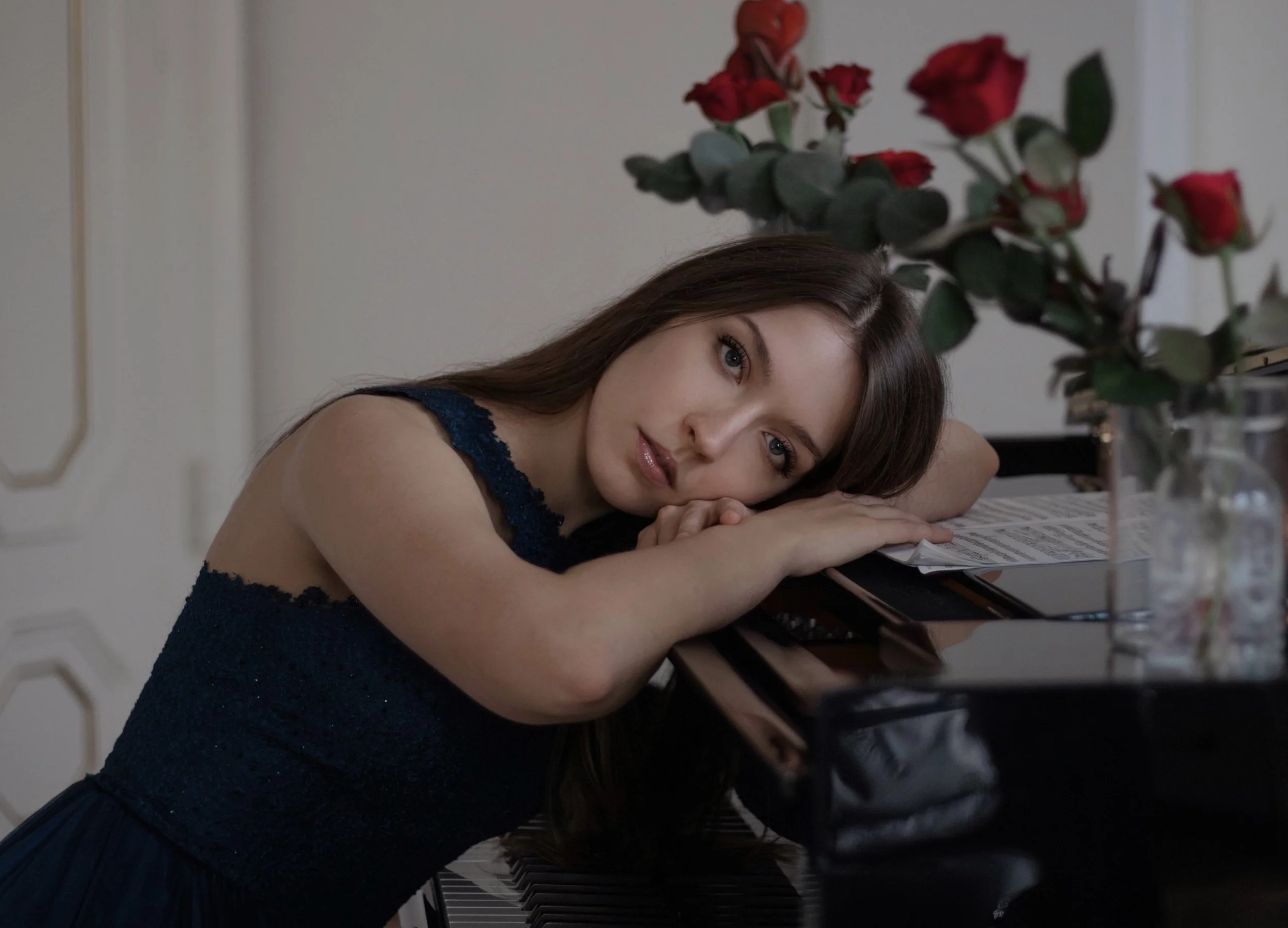
KRISTIN HÜTTER
Date and Venue
Thu. August 6 | 13:00
Museu Romântico
Program
Scarlatti | Debussy | Albéniz
Ticket Information
Entry is free, but seating is limited. Reservation required. Reserved seats not checked in by 15 minutes before the concert starts will not be honored.
PERFORMERS
Kristen Hütter
piano
PROGRAM
Domenico Scarlatti
Sonata K135 in E-major
Sonata K175 in a-minor
Sonata K492 in D-Major
Claude Debussy
Préludes Book II:
No. 1 Brouillards
No. 2 Feuilles mortes
No. 3 La Puerta del Vino
No. 4 Les Fées sont déxquises danseuses
Isaac Albéniz
1. Evocación
2. El Puerto
3. Fête-Dieu à Séville
DESCRIPTION
The concerts of the Artist Residency Series are the culmination of the participation of tomorrow’s music stars- young and brilliant pianists who come to the festival to work with the artist faculty of Porto Pianofest and prepare for tours, recordings, important concerts, and to make their art known to the world.
Pianists are chosen, from all continents, to perform in a solo recital and share their unique musical ideas with our welcoming audience in Porto.
Kristin Sophie Hütter was born in Austria in 2000 and has been playing the piano since the age of eight. She began her studies at the University of Music and Performing Arts Graz at the age of thirteen with Prof. Aima Maria Labra Makk. She also studied with Prof. Markus Schirmer and is currently working with Prof. Peter Jozsa, with whom she successfully completed her Bachelor’s degrees in Piano Performance and Piano Pedagogy (IGP).
Program Note from the Artist:
This program explores the fascinating network of musical influences that has long connected composers across time, borders, and cultures. At its core lies the Iberian musical tradition, which appears in different forms and perspectives throughout the works presented. The three sonatas by Domenico Scarlatti reflect the vibrant Spanish and Portuguese environment in which he lived and worked for many years, already incorporating rhythms and gestures reminiscent of guitar playing and Iberian folk dances. About two centuries later, Claude Debussy and Isaac Albéniz—both deeply connected to the artistic life of Paris around the turn of the twentieth century—approached the idea of Iberia from different yet complementary perspectives. Debussy’s Préludes evoke impressions of Spain through color, atmosphere, and imagination. In particular, the third prelude, La Puerta del vino, is unmistakably inspired by Spain—it begins with a habanera rhythm, making the Spanish influence clear. For the other three preludes I perform, I have personally found smaller Spanish-inspired moments; these are my own impressions, where I feel Debussy’s engagement with Iberian musical gestures can be perceived in subtle ways, though they are not explicitly labeled as Spanish. Albéniz’s Iberia draws directly on Iberian musical traditions, transforming them through the rich harmonic language and coloristic refinement of the Parisian musical world in which he spent his later years.
While studying Iberia, I became increasingly fascinated by these subtle connections between musical cultures. My interest in Iberian musical traditions deepened further through masterclasses in Spain and after receiving the Special Prize at the WPTA Spain International Piano Competition for my interpretation of Iberia. This program grew naturally from that exploration. Especially in times when the world can feel increasingly divided, this repertoire reminds us that music has always been a space of exchange and dialogue. Styles, ideas, and inspirations travel freely across borders. For the audience, this program is meant to unfold as an emotional journey: from the vibrant vitality and dance-like joy of Scarlatti, through the mysterious and atmospheric sound world of Debussy that invites curiosity and imagination, to the nostalgic beauty and rich colors of Albéniz. My hope is that listeners leave the concert not only inspired by the music itself, but also reminded of the power of cultural connection—of how creativity, openness, and exchange between cultures can create something profoundly beautiful. In this way, the program celebrates both the richness of Iberian musical traditions and the enduring ability of music to bring people together.
Entry is free, but seating is limited. Reservation required. Reserved seats not checked in by 15 minutes before the concert starts will not be honored.
VENUE
Museu Romântico
R. de Entre-Quintas 220,
4050-239
Porto, Portugal